Emergency garage door repair · Clewiston, Florida

Emergency Garage Door Repair in Clewiston, FL

Get a jammed, damaged, or unsafe door assessed and a clear repair plan for restoring access to your garage.

✓ Spring and cable diagnosis
✓ Track and roller inspection
✓ Opener and safety checks
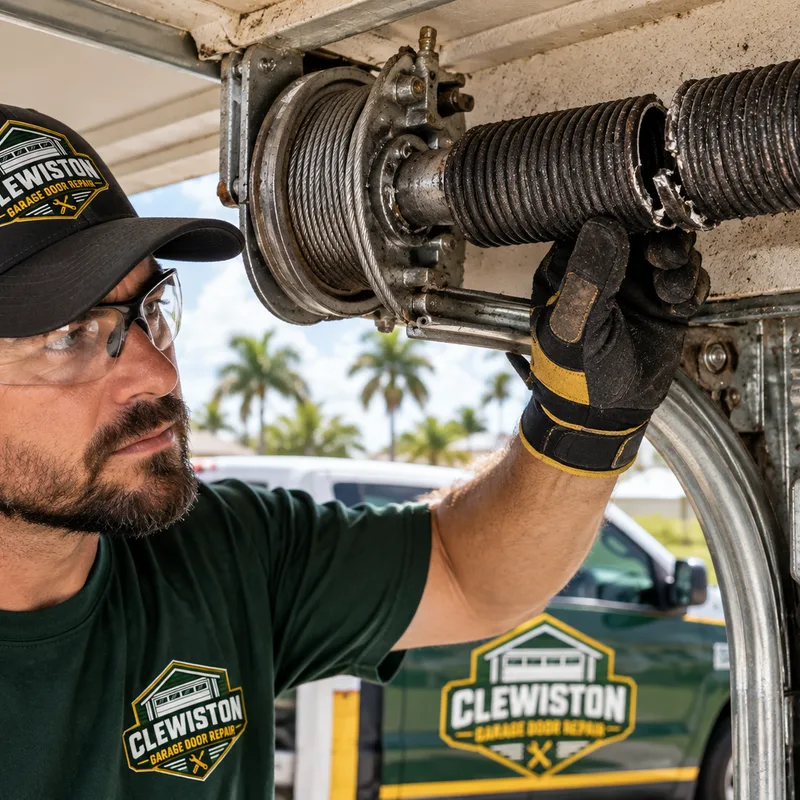
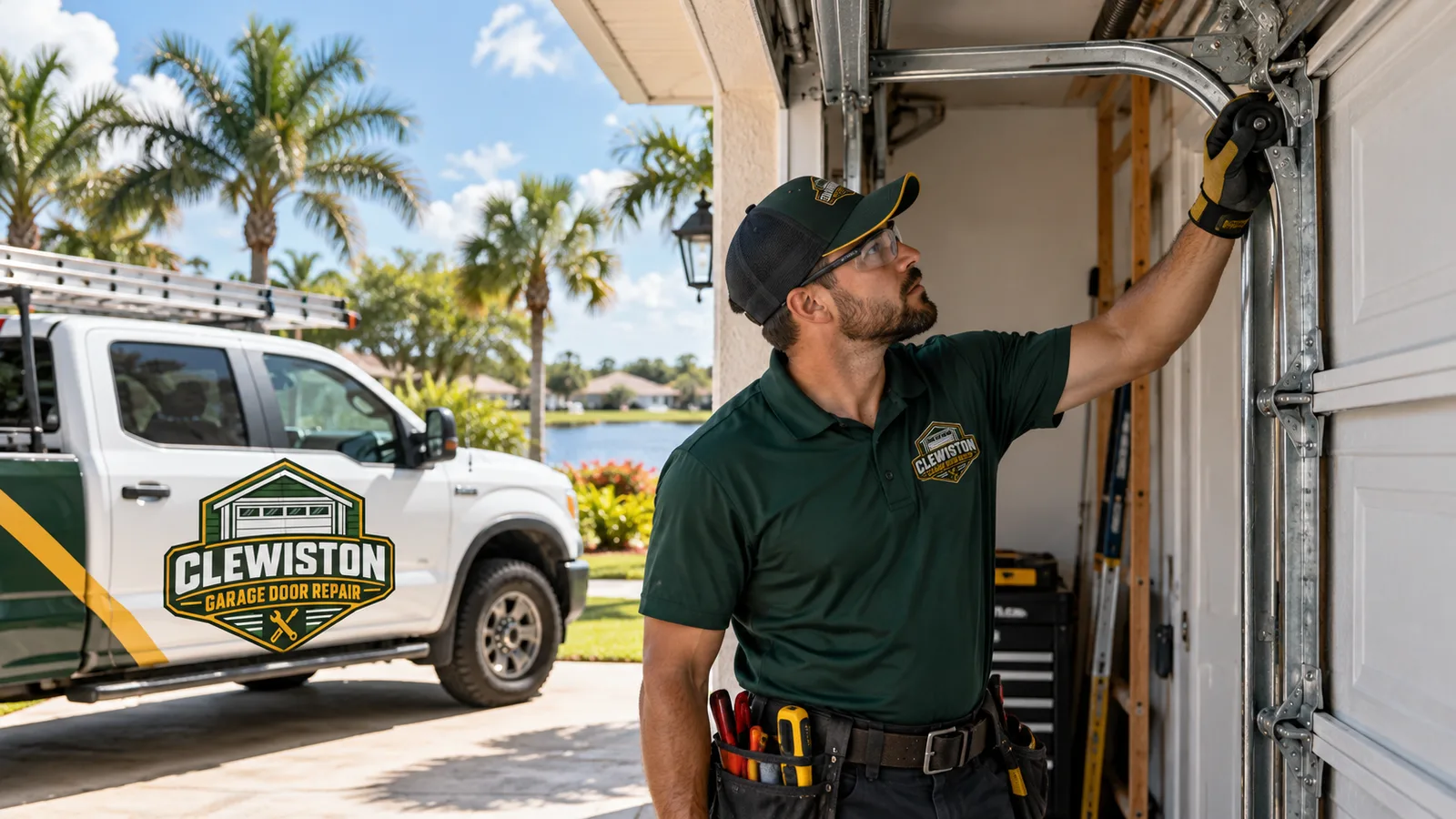
Residential garage door technician inspecting a stuck sectional door and its track in a South Florida home

Stop before forcing the door

Help When Your Garage Door Will Not Move Safely

When you need emergency garage door repair Clewiston FL residents can turn to Clewiston Garage Door Repair for help with broken springs, derailed rollers, bent tracks, damaged panels, failed cables, and opener problems. The first goal is to identify what failed and prevent additional damage while the door is inspected.

Do not force a door that is crooked, unusually heavy, or hanging by a cable. Stop using the opener, keep people and vehicles clear, and leave the door in place unless it creates an immediate safety risk. A garage door can weigh hundreds of pounds, and its springs and cables operate under substantial tension.

Clewiston's heat, humidity, heavy rain, and wind-driven debris can be hard on moving metal parts and electrical equipment. Corrosion can restrict rollers or hinges, debris can obstruct photo eyes, and moisture can affect opener controls. A proper diagnosis separates a minor obstruction or alignment problem from a failed load-bearing component. For nonurgent faults and routine work, garage door repair in Clewiston can address the broader condition of the system.
Springs, tracks, cables and openers

Emergency Garage Door Problems We Diagnose

Broken Torsion or Extension Springs

A spring failure may produce a loud bang and leave the door too heavy for the opener. Spring replacement requires matching the spring to the door's weight and configuration. Do not lift the door or adjust spring hardware yourself.

Cables Off the Drums

A loose or frayed cable can make one side rise faster than the other. Continued operation may pull rollers from the track or allow the door to drop. Cable and drum alignment must be checked before movement resumes.

Bent Tracks and Derailed Rollers

Impact, loose brackets, or a cable problem can push rollers out of their tracks. The door should remain still until the track, brackets, rollers, and alignment are inspected.

Door Stuck Open or Closed

A stuck door may involve the opener, springs, locks, tracks, or an obstruction. Diagnosis should start with the door's balance and hardware rather than assuming the motor caused the problem.

Opener Failure

A humming motor, moving trolley, flashing light, or unresponsive remote provides useful clues. The inspection can cover power, controls, travel limits, safety sensors, drive components, and the door itself.

Damaged or Buckled Panels

A vehicle strike or wind damage can distort a panel and bind the rollers. The extent of deformation and the condition of hinges, struts, tracks, and adjacent panels determine whether movement is safe.

Protect people and property first

What to Do Before Emergency Garage Door Repair Arrives

Broken torsion spring, cable drum, and upper garage door track prepared for professional inspection
Broken springs and displaced cables should be handled as high-tension components.

Keep everyone away from the opening, especially if a cable is loose, a roller has left the track, or the door is suspended unevenly. Do not stand beneath a partially open door. If the door is closed and secure, leave it closed.

Disconnecting an opener is not always safe. Pulling the emergency release while a spring is broken or the door is partly open can remove the only restraint holding a heavy door in position. Likewise, clamps, improvised supports, and attempts to rewind springs can create a sudden drop or release stored energy.

If it can be done without approaching damaged hardware, note what happened immediately before the failure. Useful details include a loud snap, a vehicle impact, a power interruption, grinding, jerky travel, or a blinking opener light. Clear access around the garage interior and move vehicles only when they can be moved without operating or passing under the damaged door.

Five-step fault assessment

How Clewiston Garage Door Repair Approaches an Urgent Fault

  1. Step 1 of 5

    Confirm the symptoms

    Clewiston Garage Door Repair starts with the door's position, recent noises or impacts, opener behavior, and any visible cable, spring, roller, track, or panel damage.

  2. Step 2 of 5

    Secure and inspect the system

    The inspection covers the door's balance, spring assembly, lift cables, drums, rollers, hinges, tracks, brackets, and opener connection. Electrical checks may include power, controls, travel settings, and photo-eye alignment.

  3. Step 3 of 5

    Explain the repair scope

    The findings determine which parts need repair or replacement and whether the door can be operated safely. The work plan should account for the underlying failure rather than treating only the visible symptom.

  4. Step 4 of 5

    Repair and align affected parts

    The required hardware is repaired or replaced, then tracks, cables, spring tension, and opener travel are set as applicable to the system.

  5. Step 5 of 5

    Test the completed movement

    Final checks should include controlled opening and closing, balance, smooth travel, reversal response, and photo-eye operation when an automatic opener is connected.

A door that is leaning, hanging by a cable, or unable to stay open can worsen without warning. Arrange an assessment before trying the opener again.

CALL NOW: (863) 228-8333

Inspection and controlled testing

Common Faults That Require a Closer Look

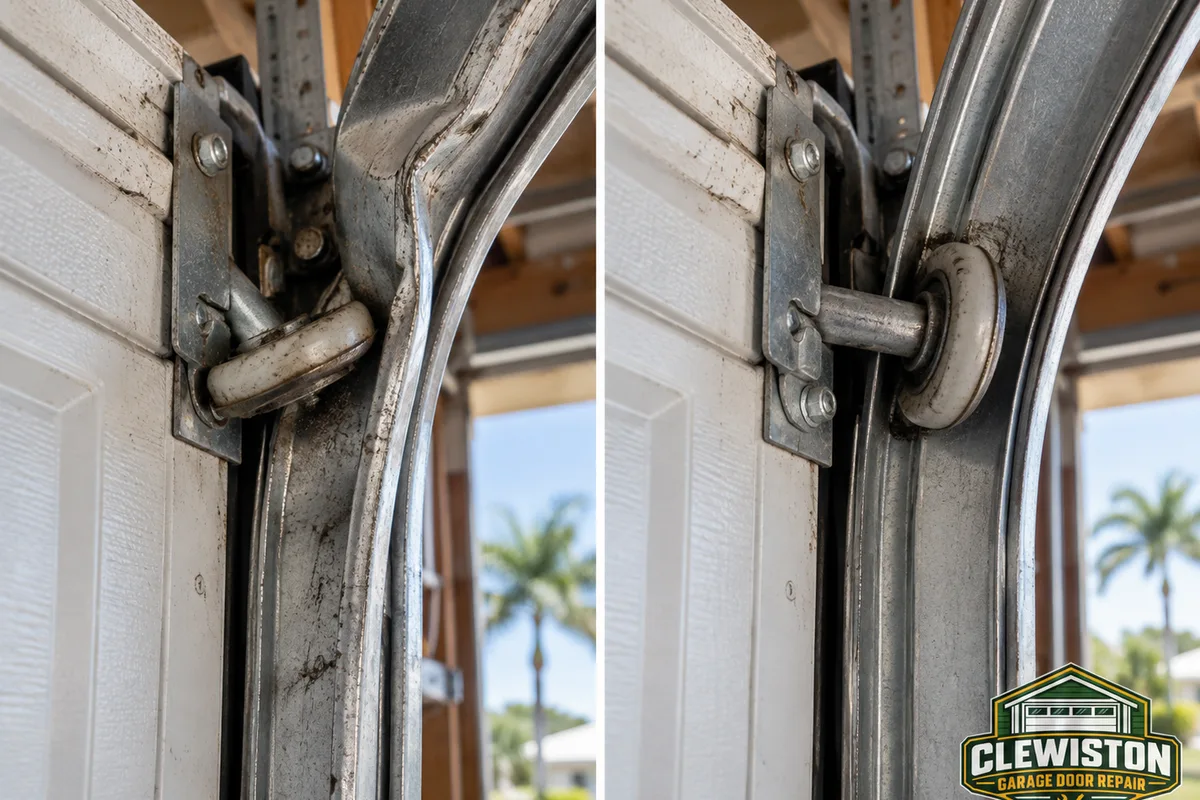
Garage door roller displaced from a bent track and the same track realigned with the roller correctly seated
Track and roller alignment before and after repair.
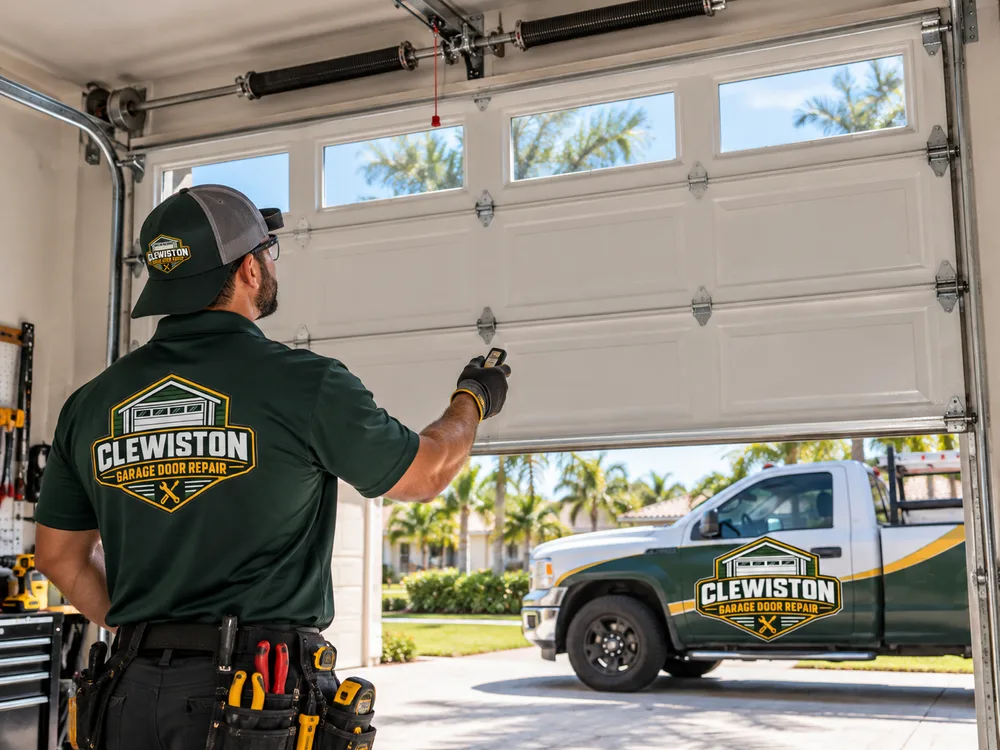
Residential sectional garage door being tested after spring, cable, and track repairs in a South Florida garage
Controlled testing confirms that the repaired door travels evenly.
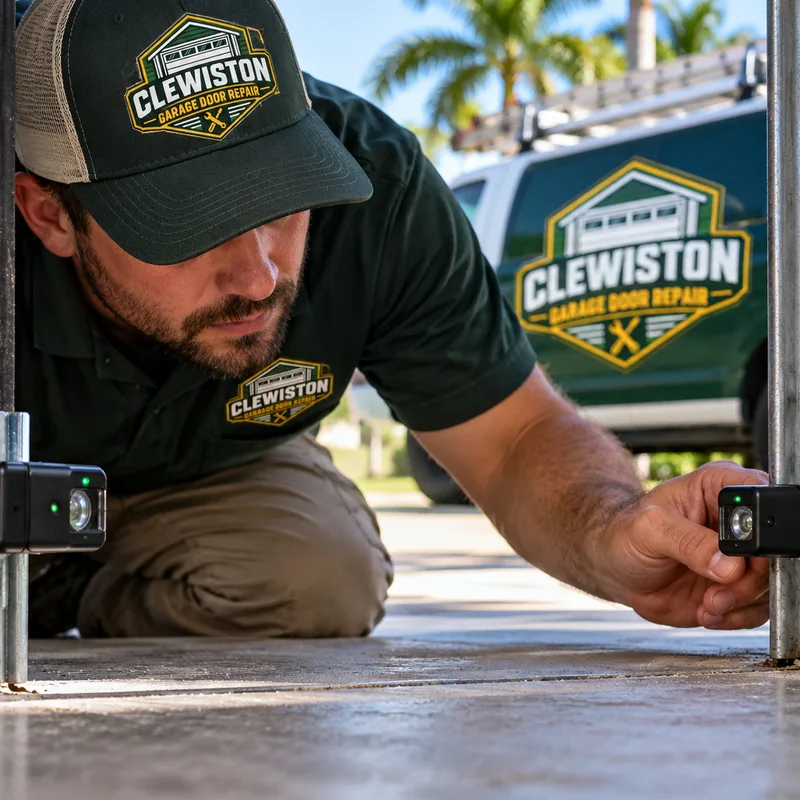
Aligned garage door photo-eye sensors near the floor with clear lenses and unobstructed brackets
Safety sensors need clear sightlines and secure alignment.

Safety and repair answers

Emergency Garage Door Repair Clewiston FL: Common Questions

Can I open my garage door when a spring is broken?

Do not operate a garage door with a broken spring. The opener is not designed to replace the spring's lifting force, and forcing the door can damage the motor, rail, cables, or panels. In Clewiston's humid conditions, corrosion may also affect related hardware, so the cables, drums, bearings, and remaining spring should be inspected.

What should I do if the garage door is stuck partly open?

Keep people and vehicles away and do not pull the emergency release. A partly open door with a failed spring, cable, or roller may fall when disconnected from the opener. Leave it undisturbed unless an immediate hazard requires assistance from emergency authorities, then arrange a professional assessment.

Does a garage door that came off its track need immediate repair?

Yes, stop using a door as soon as a roller leaves the track or the door begins hanging unevenly. Continued movement can bend the track, tear hinges from a panel, or release a cable. Clewiston Garage Door Repair can inspect the tracks, rollers, brackets, cables, drums, and panels before testing movement.

Why does my opener run while the door stays closed?

The opener may have a disengaged trolley, damaged drive component, failed gear, or a door that cannot move because of a broken spring or jammed hardware. Do not repeatedly cycle the motor. The door's balance and mechanical condition should be checked before the opener is treated as the sole cause.

Can heavy rain or humidity cause a garage door problem in Clewiston?

Yes, moisture and humidity can contribute to corrosion, dirty photo-eye lenses, electrical connection problems, and restricted hardware movement. Heavy rain can also carry debris near low-mounted safety sensors. Drying a wet sensor lens may help a minor obstruction, but grinding, uneven travel, visible damage, or a heavy door requires inspection.

Will an emergency visit always result in a complete repair?

A complete repair depends on the diagnosis, the door's condition, and the availability of correctly matched parts. Some faults can be resolved during the initial visit, while unusual springs, damaged panels, or model-specific opener components may require a follow-up. The immediate priority is to identify the failure and determine how the opening can be left safely.

Should both garage door springs be replaced together?

Paired springs are commonly evaluated together because they share the door's lifting cycles, but the appropriate repair depends on the system and each spring's condition. Spring wire size, inside diameter, length, wind direction, and door weight all matter. A technician should identify the installed setup rather than choosing a spring by appearance alone.

Ready to address the fault?

Restore Safe Access to Your Garage