The door hangs crooked
One side sitting lower than the other can indicate a displaced roller, uneven cable tension, or damaged lifting hardware. Do not stand beneath the door or try to force it level.
Serving Clewiston, Florida
Off-track garage door repair · Clewiston, Florida
Stop using a jammed or crooked door and have the rollers, tracks, cables, and supporting hardware inspected before the damage spreads.
Stop operating the door
Garage door off track repair in Clewiston, FL starts with securing the door and identifying why it left the rails. Clewiston Garage Door Repair examines the rollers, vertical and horizontal tracks, lift cables, hinges, brackets, fasteners, and opener connection before recommending work. The goal is to restore correct travel without overlooking the condition that caused the displacement.
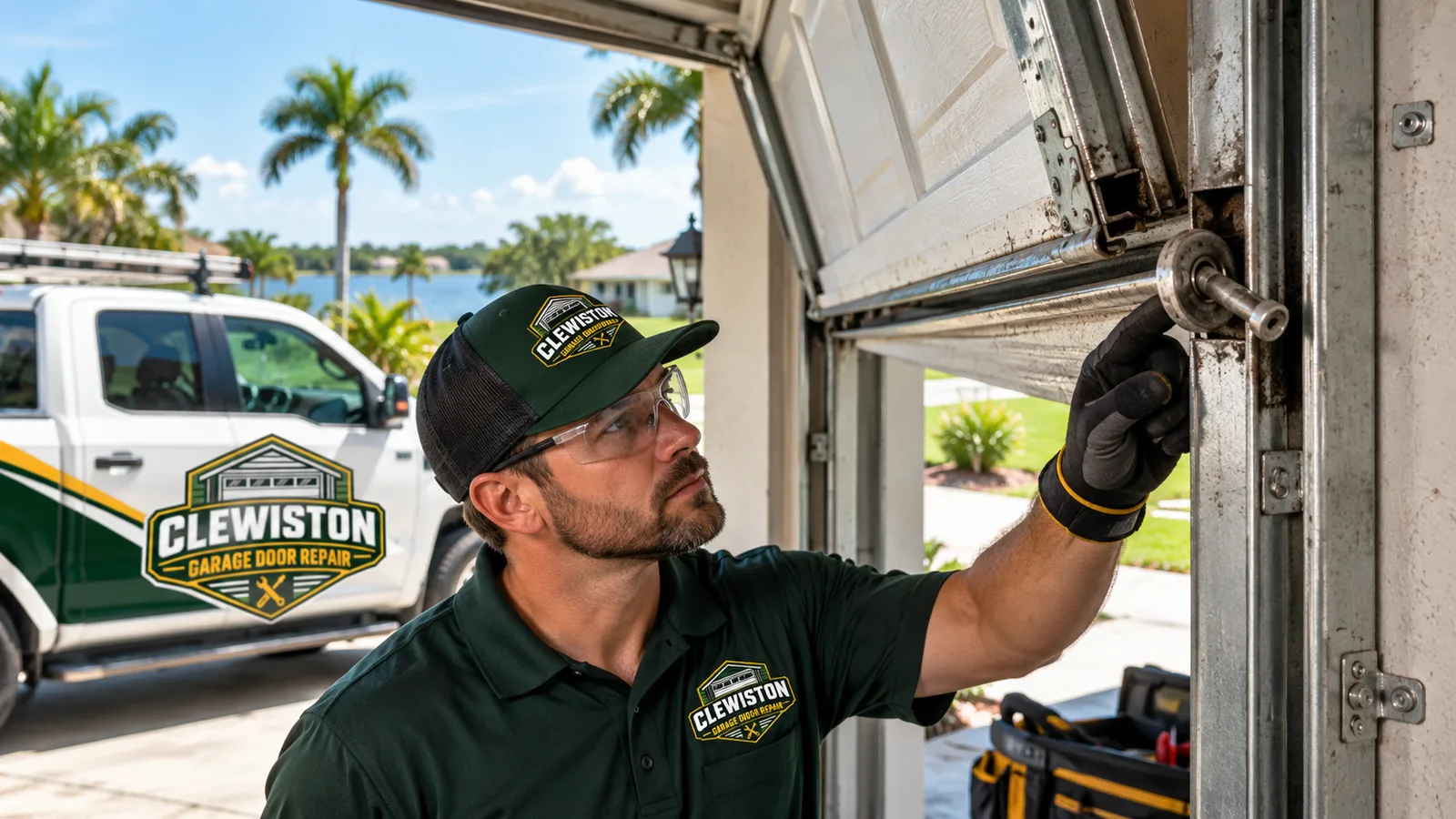
An off-track door may hang at an angle, bind during movement, scrape a rail, or leave a roller outside the track. Stop operating it when any of these signs appear. The door can shift suddenly, and repeated opener use may bend the track, damage additional rollers, or strain the top fixture and opener arm. Keep people, vehicles, and stored items away from the opening until the door is stable.
Clewiston's humid, rain-prone climate can contribute to corrosion on exposed hardware, while wind-driven debris may interfere with the lower track area. Those conditions do not explain every failure, but they are worth checking during diagnosis. For problems beyond track alignment, garage door repair in Clewiston can address the broader door system.
Diagnose the whole system
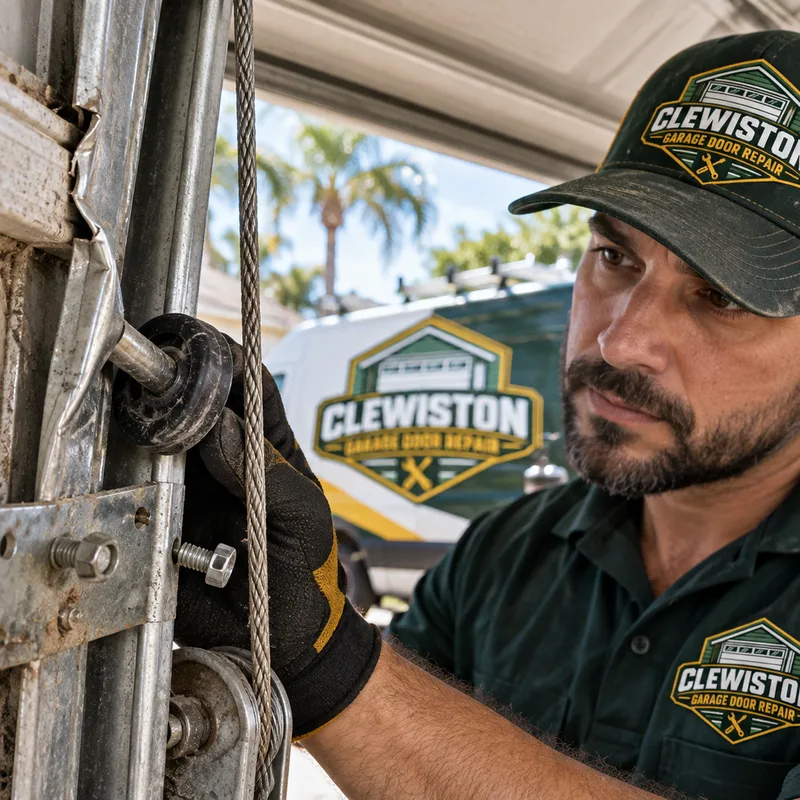
A roller rarely leaves the track without another condition contributing to the failure. A loose track bracket can let the rail spread away from the door. A bent vertical track can catch a roller as the door moves. Worn roller stems, damaged hinges, an obstruction near the floor, or impact from a vehicle or equipment can also push the door out of alignment.
Cable trouble requires particular care. If one lift cable slips, frays, or loses tension, one side of the door may rise faster than the other. The resulting angle can pull rollers from the tracks. The door may look like a track problem even though the lifting system caused it. High-tension cables, bottom brackets, and springs should not be adjusted as a do-it-yourself repair.
The inspection also considers whether the tracks are plumb, parallel, securely fastened, and correctly spaced for the roller system. A technician can then determine whether the rail can be realigned or whether a damaged component should be replaced.
Warning signs to recognize
One side sitting lower than the other can indicate a displaced roller, uneven cable tension, or damaged lifting hardware. Do not stand beneath the door or try to force it level.
Even one displaced roller changes how the door's weight is supported. Further movement may pull additional rollers out or deform the rail.
Grinding, rubbing, or a sudden stop may point to a bent track, failed roller, loose bracket, or obstruction. Disconnecting the opener does not make a heavy, unstable door safe to move.
A slack, frayed, or unspooled cable can leave the door unevenly supported. Keep clear of the bottom brackets and spring system because these parts may remain under tension.
Missing or loose fasteners can change the rail spacing and let a roller escape. The mounting surface and brackets should be checked before the track is reset.
An opener is designed to guide a balanced door, not pull a jammed one back into line. Stop repeated attempts if the rail flexes or the motor stalls.
Five-step repair process
Step 1 of 5
Clewiston Garage Door Repair first assesses the door's position and limits movement. A hanging or twisted door must be supported before rollers or brackets are handled.
Step 2 of 5
The tracks, rollers, hinges, lift cables, drums, brackets, fasteners, opener arm, and visible spring-system components are checked. This separates a simple displacement from damage involving the lifting system.
Step 3 of 5
Usable tracks may be straightened and repositioned, while badly bent rails, worn rollers, cracked hinges, or compromised hardware may require replacement. The work depends on what the inspection reveals.
Step 4 of 5
The rollers are returned to the rails, mounting hardware is secured, and the vertical and horizontal track alignment is corrected. Clearances must allow the door to travel without binding.
Step 5 of 5
The door is moved through its travel to check balance, roller movement, cable tracking, and opener operation when appropriate. Any remaining rubbing or uneven motion is addressed before normal use resumes.
Repair what the inspection reveals
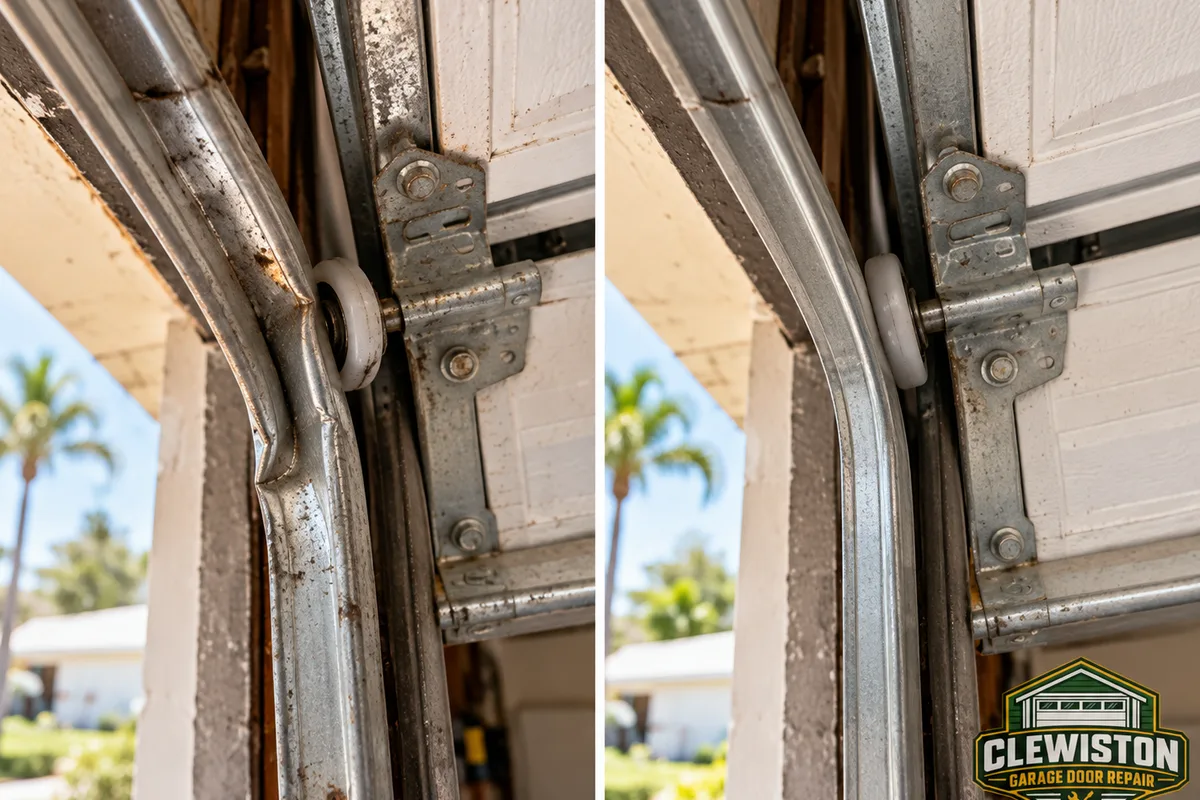
A track does not automatically need replacement because a roller came out. If the rail remains structurally sound, it may be possible to correct its position, restore proper spacing, secure the brackets, and reset the roller. Replacement is more appropriate when the track is sharply creased, split, heavily corroded, or unable to hold its intended shape.
Rollers deserve the same component-by-component assessment. A roller with a bent stem, damaged wheel, excessive play, or seized bearing can continue to bind after the door is realigned. Hinges and top fixtures also need secure mounting because they control the roller position relative to the door panels.
Florida humidity and wet weather make corrosion checks relevant around lower track fasteners and exposed steel components. After storms or strong winds, debris around the opening should be cleared before operating the door. If the door was struck, report the impact and avoid moving it; panel distortion and track displacement can occur together.
A crooked or displaced garage door can become harder to stabilize with every operating attempt. Arrange an inspection so the cause and repair scope can be established safely.
CALL NOW: (863) 228-8333Safety and repair answers
No, stop using the door when a roller is outside the track. Operating the opener may pull more rollers free, bend the rail, or worsen cable and hinge damage. Keep the Clewiston garage opening clear and arrange an inspection before moving the door again.
Yes, a track may be reused if it can be returned to the correct shape and securely mounted. Replacement may be needed for a deeply creased, split, heavily corroded, or impact-damaged rail. Clewiston Garage Door Repair determines this after checking track spacing, brackets, rollers, and the cause of displacement.
A straightforward roller reset and track realignment may be completed during one service visit, but extensive impact damage or parts replacement can take longer. Door size, cable condition, bent hardware, and parts availability determine the timeline. The technician can explain the repair scope after securing and inspecting the door.
Disconnecting the opener does not make an off-track door safe to move. A crooked door may be unevenly supported, and releasing the trolley can allow an unexpected shift. Leave the door in place, clear the area, and avoid handling cables, springs, or bottom brackets.
Weather can contribute indirectly through corrosion, loose hardware, or debris near the lower tracks, but a full inspection is needed to identify the actual cause. Clewiston's humid, rainy conditions make exposed hardware and lower track areas worth checking, particularly after severe weather.
Ready to stop the damage?
An inspection secures the system, identifies the cause, and establishes the repair scope for displaced rollers, loose cables, or impact damage.