
Correct Spring Selection
The replacement must suit the door's actual weight and geometry. Matching only the spring's visible dimensions can produce too much or too little lift.
Serving Clewiston, Florida
Garage door spring repair · Clewiston, Florida
Restore balanced movement with a careful inspection, correctly matched replacement springs, and a complete operational test.
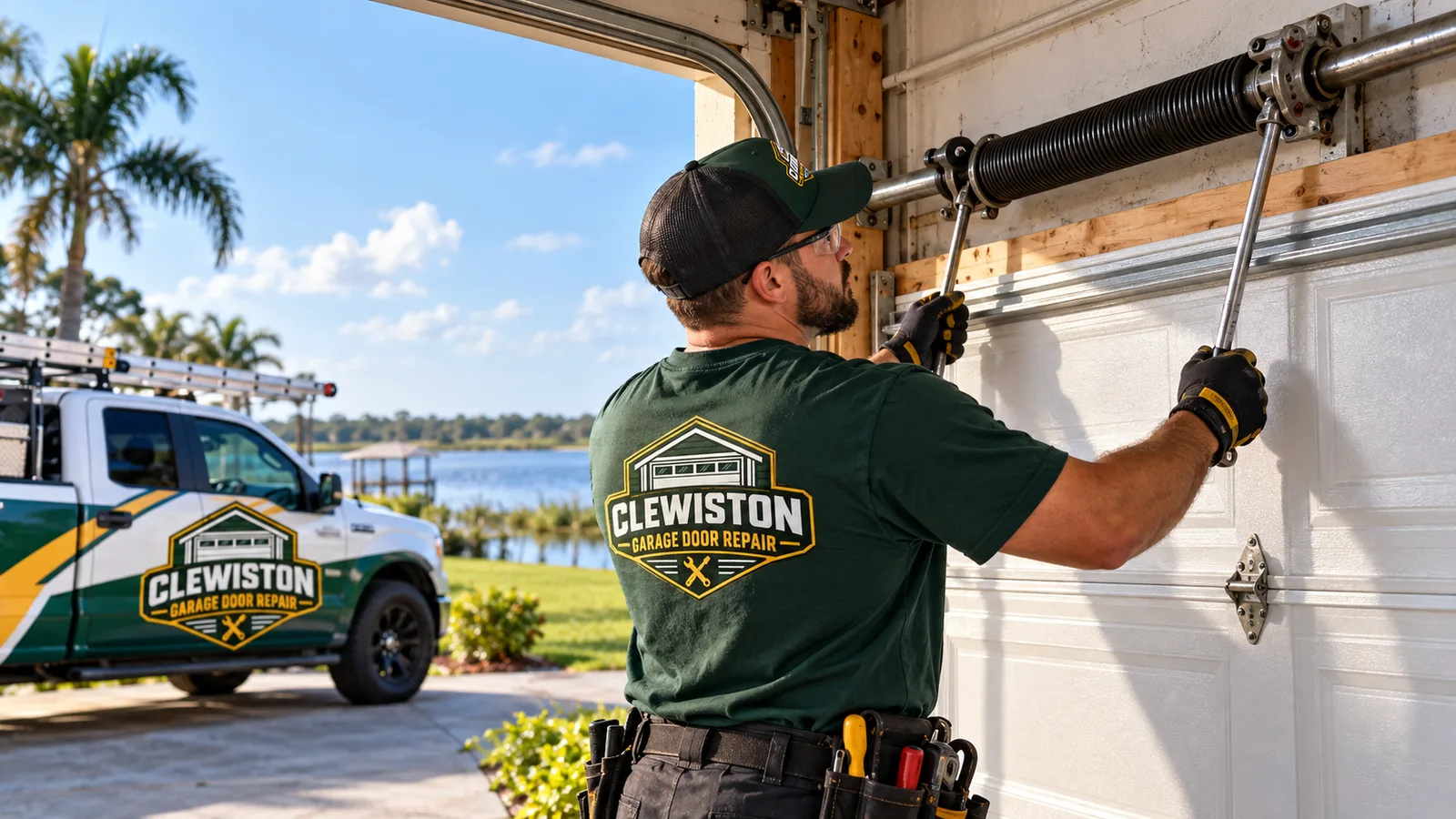
Restore the lifting force
When a spring breaks, the opener may strain, the door may rise unevenly, or the door may not open at all. Clewiston Garage Door Repair provides garage door spring repair in Clewiston, FL for systems that have lost the lifting force needed to move safely and smoothly.
A garage door can weigh hundreds of pounds, but properly selected springs counterbalance that weight. The opener guides the door through its travel; it is not meant to carry an unbalanced door by itself. Continuing to operate a door with a broken or weakened spring can place added load on the opener, cables, rollers, hinges, and track hardware.
Service begins by identifying the spring system and checking the condition of related components. Residential doors commonly use torsion springs on a shaft above the opening or extension springs along the horizontal tracks. The correct repair depends on the door's weight, height, track setup, drum size, wire diameter, inside diameter, and spring length. Those details determine the replacement spring rather than appearance alone.
Know when to stop operating the door
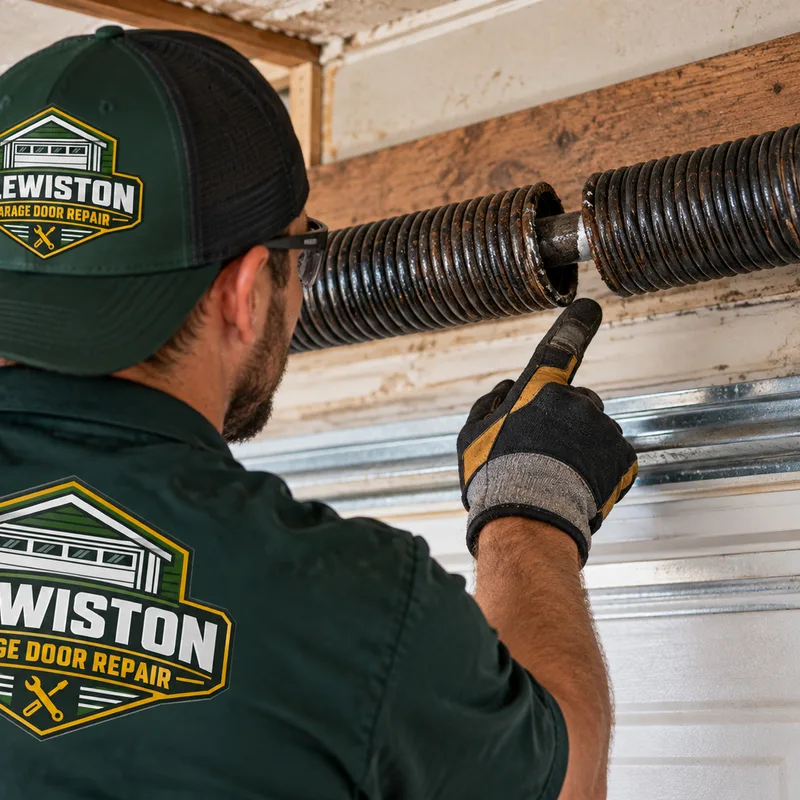
A visible gap in a torsion spring is a clear sign that the coil has separated. With extension springs, a broken or stretched coil may hang beside the track. Other warning signs include a door that feels unusually heavy, stops shortly after lifting, closes hard, sits crooked, or needs help to move.
A loud bang from the garage can be the moment a spring breaks and rapidly releases stored energy. The door may remain closed afterward, or it may stop partway through a cycle. If the door is crooked, a lifting cable may also have come off a drum. Stop using the opener and keep people, pets, and vehicles clear of the opening until the system is inspected.
Do not pull the emergency release while a raised door is unsupported. An unbalanced door can descend quickly after it is disconnected from the opener. Spring winding, cable reset, and tension adjustment require the correct tools and control of the door's weight.
More than replacing a coil
The replacement must suit the door's actual weight and geometry. Matching only the spring's visible dimensions can produce too much or too little lift.
The shaft, center bearing, end bearing plates, drums, cables, bottom brackets, tracks, and rollers should be checked for wear or damage that affects movement.
After tension is set, the door should remain controllable through its travel rather than dropping shut, racing upward, or feeling excessively heavy.
Once the door moves correctly by hand, the opener can be reconnected and tested for normal travel, force response, and reversal operation.
Heat, humidity, and storm exposure
Clewiston's hot, humid weather matters because exposed steel components can develop surface corrosion, particularly where moisture collects around coils, cables, fasteners, or bearing plates. Corrosion does not prove a spring is about to fail, but pitting, flaking, deformation, and uneven coil spacing deserve closer inspection. Lubrication can reduce friction and noise on suitable moving parts, but it cannot restore a fatigued or broken spring.
Homes near Lake Okeechobee also face wind-driven rain and humid air during Florida's storm season. After severe weather, a door that binds, rubs, or no longer sits square may have more than a spring problem. Tracks, brackets, panels, and attachment points should be evaluated before spring tension is changed. A spring adjustment cannot correct structural distortion.
Spring work is distinct from general garage door repair in Clewiston, though an inspection may uncover related trouble with cables, rollers, tracks, or the opener. Clewiston Garage Door Repair keeps the diagnosis centered on what prevents the door from balancing and moving properly.
Five-step repair process
Step 1 of 4
The door is kept in a controlled position while the spring arrangement, lift cables, drums, bearings, tracks, brackets, and opener connection are examined.
Step 2 of 4
The door and existing hardware are assessed to determine the appropriate spring specifications. For a paired torsion setup, the condition and cycle history of both springs should be considered before the repair scope is set.
Step 3 of 4
The damaged spring is removed, the replacement is installed, and controlled tension is applied with tools made for the spring system. Cable seating and drum alignment are checked during this work.
Step 4 of 4
The door is moved by hand to check balance and smooth travel. The opener is then reconnected and the complete system is tested before service is finished.
A broken spring can leave the door dangerously heavy or trap a vehicle inside. Arrange an inspection before operating the door again.
CALL NOW: (863) 228-8333Spring safety and service answers
A door with a broken spring should generally remain closed until it can be inspected. The opener may not lift the unbalanced weight, and forcing it can damage the motor or drive system. If the door is already raised, keep the area clear and do not disconnect the opener without controlled support.
Paired springs are often considered together because they share the lifting cycles and may have similar wear. Replacement depends on the system's configuration, spring condition, and service history. Clewiston Garage Door Repair can inspect both springs and explain whether replacing one or the pair is appropriate.
Many straightforward residential spring replacements can be completed in one service visit, but the time depends on access, spring availability, and whether cables, drums, bearings, or brackets also need attention. The door must be balanced and tested before the work is complete.
No. Noise can come from dry rollers, loose hinges, worn bearings, a strained opener, track contact, or spring coils rubbing as they move. Clewiston's humidity can also contribute to corrosion on exposed steel. An inspection can locate the sound and determine whether spring repair is needed.
Adjustment may correct an intact spring system with improper tension, but it cannot repair a separated coil, severe corrosion, deformation, or fatigue-related failure. The spring and connected hardware must be inspected before tension is changed.
It may restore operation if the opener stopped because it could not lift an unbalanced door, but the opener still needs testing afterward. A spring repair does not correct a failed motor, damaged gear, travel-setting problem, or faulty safety sensor.
Ready to restore operation?
A spring-system inspection identifies the affected components and the appropriate repair scope before work begins.